

Building Bridges, One Step at a Time: Jiangsu University's Decade of U.S.-China Youth Exchange
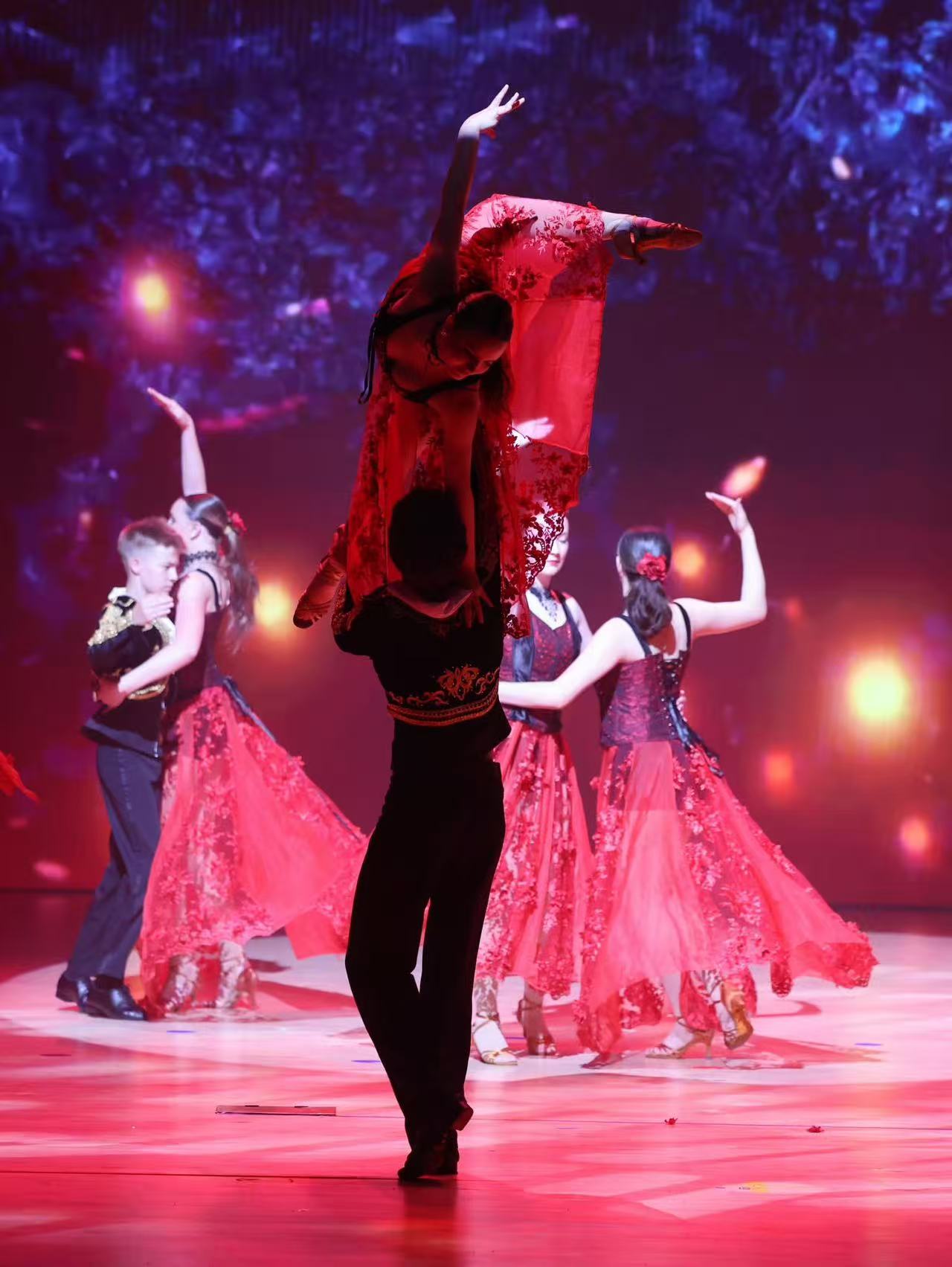
The Utah Youth Dance Troupe performs during the "River and Dance" special performance at Jiangsu University. This marked their fifth visit to the university.
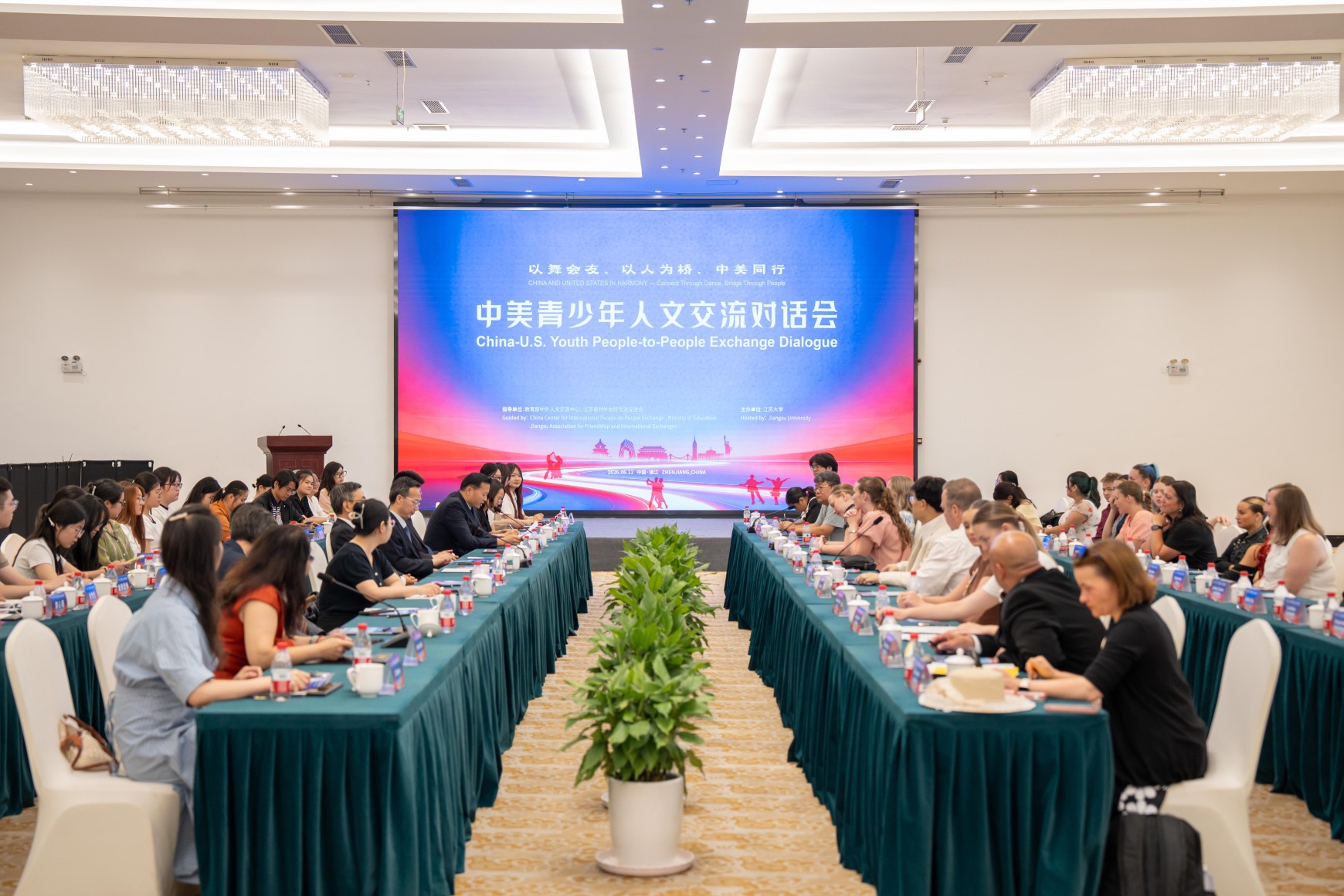
American and Chinese students engage in dialogue at the U.S.-China Youth Forum, Jiangsu University, June 2026.
Nanjing University students present Chinese dances at a dance exchange event with U.S. peers, June 13, 2026.
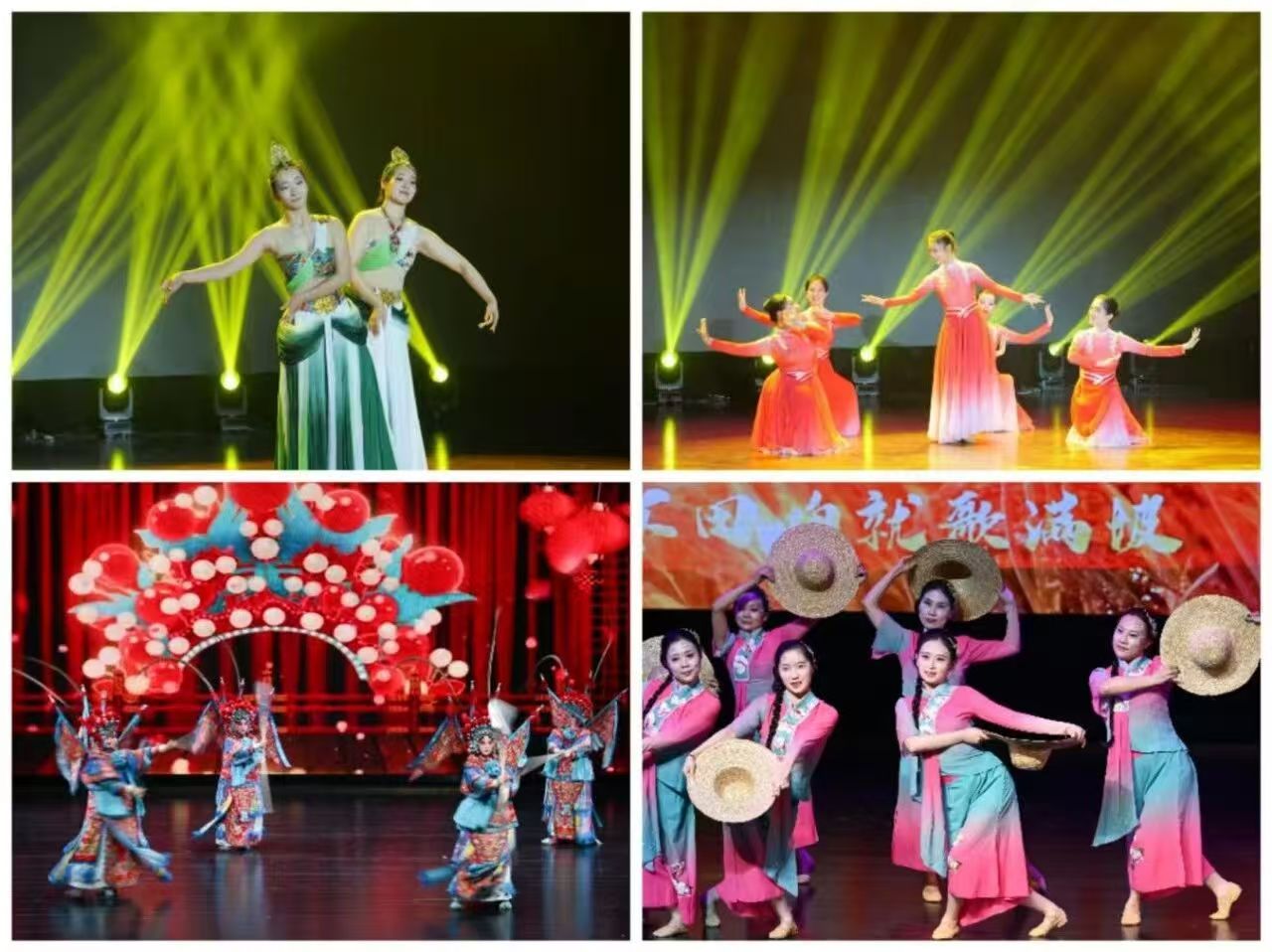
Members of the Utah Youth Dance Ensemble perform at the opening ceremony of the Nanjing Cultural Tourism Festival, held at Xuan-wu-hu Park.
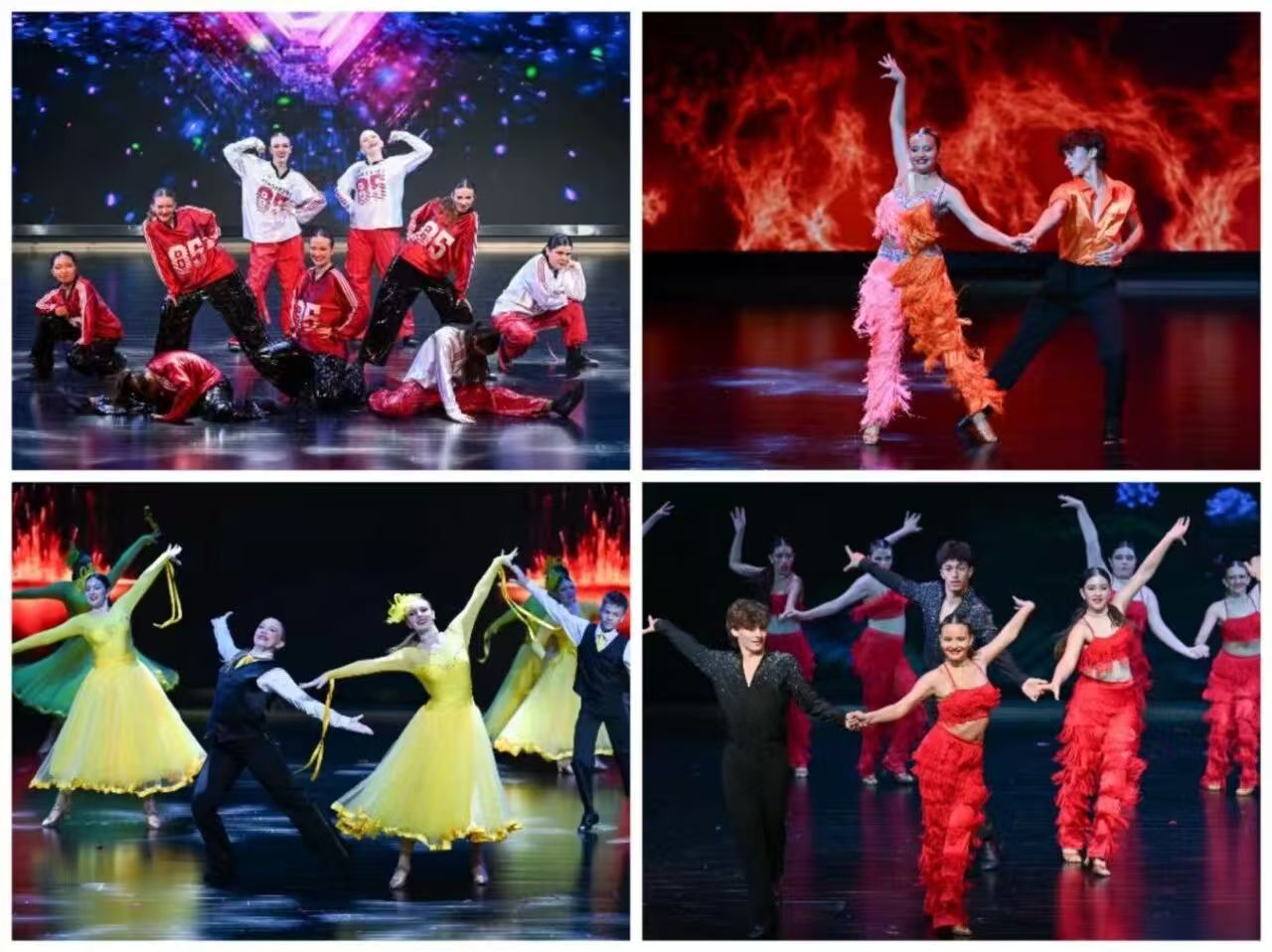
In this composite image, members of the Utah Youth Dance Ensemble are seen in four performance sequences on stage at Nanjing University
In June 2026, Jiangsu University, China hosted the Utah Youth Dance Troupe for the fifth time since 2017 — a decade of sustained U.S.-China cultural exchange.
ZHENJIANG, JIANGSU, CHINA, June 24, 2026 /EINPresswire.com/ -- The sound of music and footsteps filled the air as the Utah Youth Dance Troupe (ASA Legacy Dance Studio, Utah) took the stage for the fifth time in a decade.
Over the course of nine days, the troupe traveled through six cities — Shanghai, Suzhou, Zhenjiang, Nanjing, Huai'an, and Beijing — performing, learning, and connecting with Chinese students. On June 17, they arrived to Salt Lake City, Utah bringing to a close the 2026 "River and Dance" U.S.-China youth exchange program.
It was the fifth visit since 2017. Ten years. Five visits. One university's quiet commitment to building a bridge that neither politics nor pandemics could break.
A Quiet Commitment
Jiangsu University is located in Zhenjiang, a city where the Yangtze River and the Grand Canal meet. The university is best known for its agricultural machinery programs — a classic Chinese engineering institution with its feet firmly planted in the soil of technology and industry.
In 2017, the university's International Office and Youth League Committee launched an initiative: invite the Utah Youth Dance Troupe to China. Not a high-profile government project. Not a headline-grabbing summit. Just an invitation — extended in the belief that dance needs no translation and youth needs no explanation.
The troupe came in 2017, 2018, and 2019 — three consecutive years. Then COVID-19 shut down the world. Borders closed. Programs evaporated. Many exchanges never returned.
But Jiangsu University stayed in touch. Emails continued. Video calls happened. The connection never fully went dark.
When borders reopened in 2023, the university moved quickly. The troupe came for a fourth time in 2025, and a fifth in 2026.
Ten years. Five visits. In the grand scheme of university rankings and research assessments, this was a quiet front. But quiet does not mean small. What it reached — the human heart — is precisely what metrics cannot measure.
From Stage to Community: A Deeper Exchange
The fifth visit was not just about performances. The itinerary spanned six cities and the content went far beyond the stage.
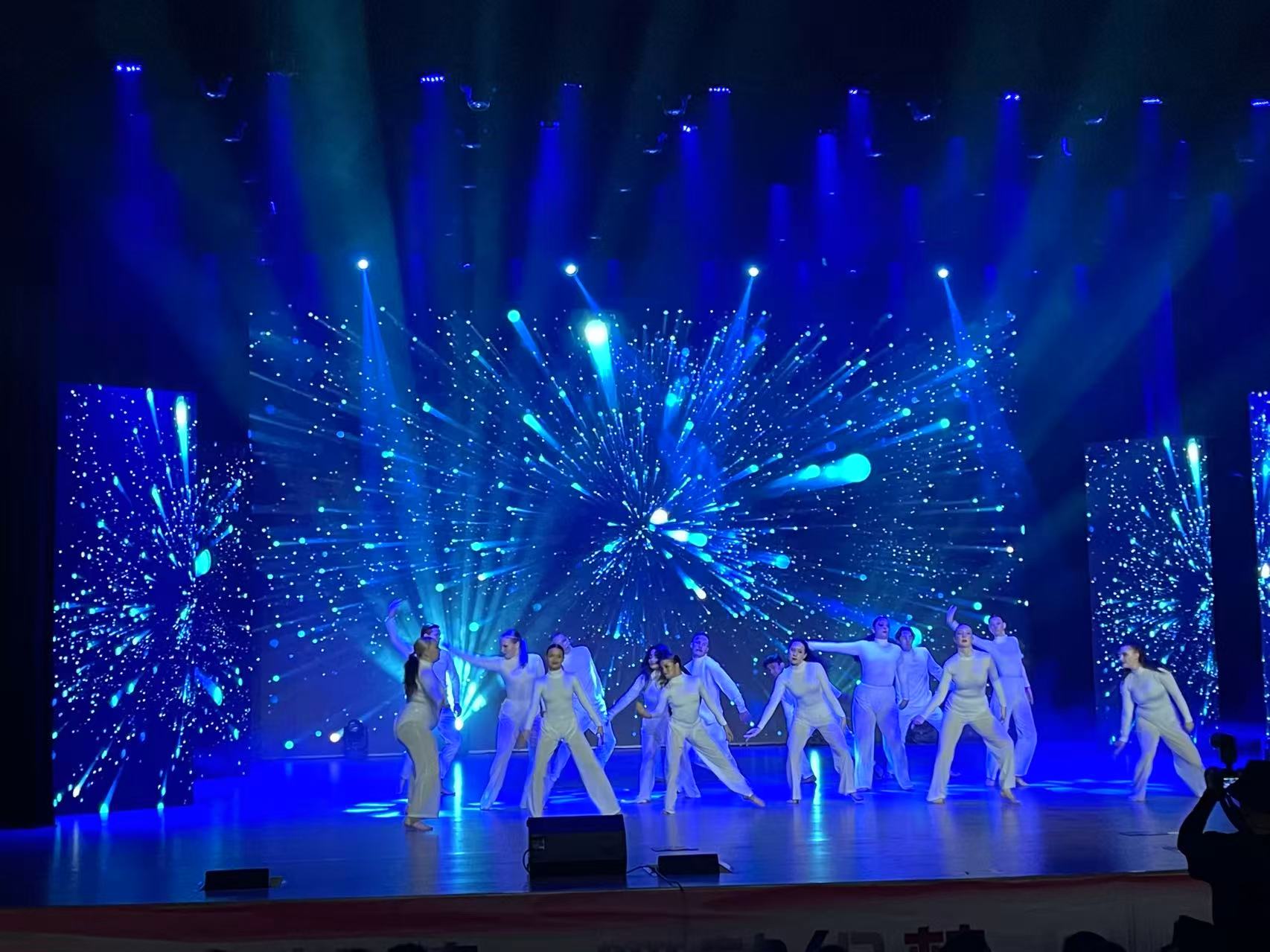
At Jiangsu University, Soochow University, Nanjing University, Shanghai Industrial and Commercial Foreign Language College, Jinhu County in Huai'an, and Beijing's Daoxianghu School, American and Chinese students shared the stage. Their repertoire ranged from musical theater and folk dance to modern dance, ballroom, jazz, Latin, hip-hop, and acrobatic tumbling. Each performance drew waves of applause.
But the real exchange happened offstage.
At Jiangsu University, a forum brought together 32 American students and parents with Chinese scholars and students for discussions on cultural identity and people-to-people friendship. The conversations were candid, curious, and respectful.
The group visited the Pearl S. Buck Memorial Hall, where the American students learned about a woman who spent decades bridging East and West through her writing. They stood in the courtyard where she once lived, listening to stories of a time when cultural understanding was even harder to come by than it is today.
They also visited the former site of the Suzhou Branch of the Chinese Communist Party — a modest courtyard shaded by a century-old cedar tree. There, they listened to a 20-minute lecture on the history of the site by Prof. Danny Dong, Jiangsu University and the President of Sino-American Culture & Performance Exchange Association, U.S.A. The students, ranging from elementary to college age, stood in complete silence. No phones. No whispering. Just attention.
One student, upon learning that the three founders of the branch were only 27 years old on average when they established it, let out a quiet "wow." It was the kind of sound that comes not from curiosity, but from being moved.
In Jinhu County, the troupe took their art to the countryside — a program sponsored by the Jiangsu Federation of Returned Overseas Chinese. The venue was a local arts center, and the audience was filled with Chinese middle school students. At first, the young audience sat stiffly — trained by years of intense academic pressure to be quiet and obedient.
A few minutes into the performance, the troupe's program director walked to the front of the stage and said: "This is your moment. Relax. You can clap. You can cheer."
Hesitation. Then a single clap. Then laughter. Then cheers.
By the end, the theater was alive. When the performance concluded, the director addressed the young audience again: "Tonight, you gave your applause to the performers. Now — applaud yourselves. For showing up. For being here. For being you."
The room erupted. The cheers went on and on.
It was a small moment. But those who were there understood: this is what exchange looks like when it reaches people where they are.
One Family's Story
Earlier that same day, at the Pearl S. Buck Memorial Hall, a parent in the group stopped in front of a display case. Inside was an old sewing machine.
She murmured to herself, in English: "This sewing machine ... it's the same brand as the one in my home."
Not much was said at the time.
But that evening, during dinner, she walked over to the program director, her face flushed with excitement. She pulled out her phone and showed him family photos — genealogical records that traced her lineage.
Her father's side: seventh generation descendant of Pearl S. Buck.
Her mother's side: sixth generation descendant of Edgar Snow.
She had stood in the very place where her ancestor once lived, and recognized a sewing machine that had been passed down through her own family. She didn't know she would find it there. She didn't plan it. History simply arrived, unannounced, in a museum display case.
A Student's Voice
Throughout the nine-day tour, one sentiment was repeated again and again — by American students, by Chinese students, by parents and teachers.
A young American dancer told Jiangsu Television International: "Wherever we went, we didn't speak the language. But smiles and gestures showed us that there is an unbreakable friendship between Chinese and American youth."
It was a simple statement. But it captured the entire purpose of the decade-long effort: that connection does not require fluency. It requires presence.
Why This Matters — and What It Means for Higher Education
For a university best known for agricultural engineering, this decade of cultural exchange may seem like a departure from its core mission. But that is precisely the point.
The case offers four lessons for other universities.
First: consistency over frequency. Five visits in ten years is not a high cadence. But the relationship survived a global pandemic because the university maintained the connection — not because there was a budget line for it, but because people on both sides kept writing emails, kept making calls, kept believing it would resume. International cooperation is not about how many events you host in a single year. It is about how many years you show up.
Second: depth over breadth. The program evolved from pure performance into something multi-dimensional — academic forums, historical site visits, rural outreach. Each iteration built on the previous one. The project grew organically, not because someone mandated it, but because participants on both sides kept asking: "What else can we do?" The lesson: let exchange programs breathe.
Third: balance technology with humanity. Engineering schools produce problem-solvers. But the full education of a person requires something beyond algorithms and equations. Cultural exchange teaches empathy, curiosity, and the ability to see the world through another's eyes. These are not soft skills. They are essential skills. Jiangsu University's decade of engagement with the Utah dance troupe is not a distraction from its engineering mission — it is a completion of it.
Fourth: don't underestimate the grassroots. The exchange was not driven by a high-level diplomatic initiative (though it aligns with China's "50,000 American youth in five years" initiative). It was driven by one university's international office, one professor's persistence, and one dance troupe's willingness to return, year after year. Grassroots exchanges are not glamorous. But they are durable. They outlast headlines.
A Bridge Built Brick by Brick
Edgar Snow once wrote *Red Star Over China*, introducing the world to a country they did not understand. Pearl S. Buck wrote *The Good Earth* and spent her life bridging East and West.
Both were Americans. Both are buried in the American soil their families came from.
But their legacy — the bridge they helped build — lives on.
A century after their work, a group of young dancers from Utah — Snow's home state — came to China for the fifth time. They danced in university auditoriums. They stood silent under a century-old cedar tree. They watched a sewing machine in a museum and recognized their own family's brand.
And in a small town in rural China, a group of exhausted middle school students were told: "You can clap. You can cheer." They did.
The bridge is still being built. Not by governments alone — but by professors who persist, by students who show up, by dance troupes who keep coming back, by families whose histories intertwine with the very places they visit.
At Jiangsu University, they have been building it for ten years. Brick by brick. Visit by visit. They will keep building.
Because the bridge does not build itself.
Danny Dong
Jiangsu University, China
+1 801-915-8880
1000006895@ujs.edu.cn
Legal Disclaimer:
EIN Presswire provides this news content "as is" without warranty of any kind. We do not accept any responsibility or liability for the accuracy, content, images, videos, licenses, completeness, legality, or reliability of the information contained in this article. If you have any complaints or copyright issues related to this article, kindly contact the author above.
